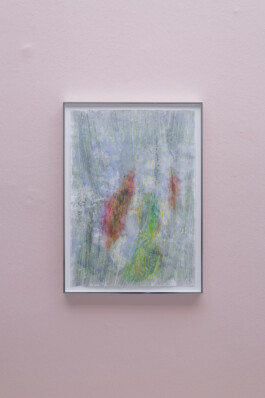
L'Inspecteur des Cultures
solo exhibition
Galerie Françoise Heitsch, Munich
21 June – 27 July 2024
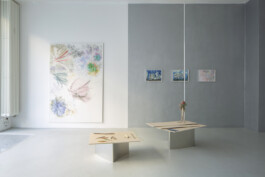
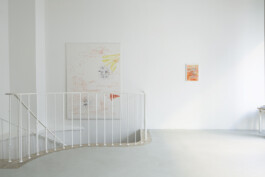
In her solo exhibition at Françoise Heitsch, Berlin-based artist Judith Raum presents works from her series eser (Turkish for ‘work’ or ‘artwork’), which emerged from the artist’s long-standing engagement with German economic colonialism in the Ottoman Empire prior to 1918. In her artistic research projects, Judith Raum regularly conducts intensive research in archives and with historical sources. In response to her findings – often narrative threads overlooked by official historiography – the artist deliberately works in the traditional artistic media of painting, drawing and objects, which she presents in installation or performance formats. Judith Raum has recently attracted international attention with her artistic research into the Bauhaus textile workshop and her reappraisal of the work of textile designer Otti Berger; the monograph she edited, *Otti Berger. Weaving for Modernist Architecture* (Hatje Cantz), published in March, has been widely received, and Raum’s works on the subject have been featured in several exhibitions (*Taking a Thread for a Walk*, MoMA New York 2020/21; *Textile Territories*, Bauhaus Dessau Foundation 2021; *Otti Berger. Fabrics for Modernist Architecture, temporary bauhaus archiv berlin 2024; Pondering Provenance, Zilberman Gallery Berlin 2024).
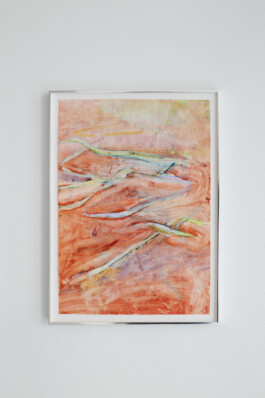
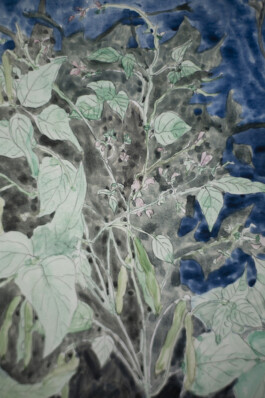
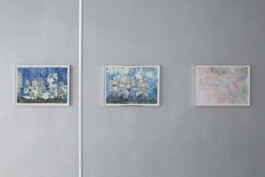
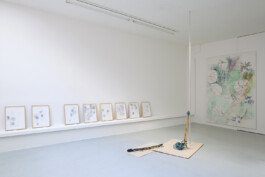
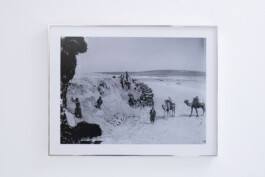
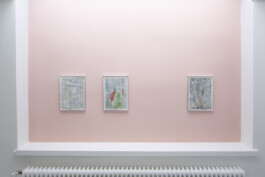
The exhibition at Françoise Heitsch deliberately brings together works from an earlier artistic research project by Judith Raum: large-format paintings, works on paper and fragile objects that explore Deutsche Bank’s involvement in the construction of the Anatolian Railway and the Baghdad Railway between 1900 and 1918. To this end, the artist visited the Deutsche Bank Economic Archive in Frankfurt am Main on several occasions between 2010 and 2014 and travelled extensively along the route of the historic railway line, which now lies within Turkish territory. She discovered striking sources relating to German agricultural experiments along the route, carried out by so-called ‘cultural inspectors’ (Inspecteurs des Cultures) who were tasked with optimising the exploitation of crops and raw materials for German interests. Raums’ works exhibited at Françoise Heitsch focus on “that which resists and deviates from the rigid, planned approach to landscape and nature, from undirectional maximisation and imperialist fantasies of control”, as art historian Ines Kleesattel put it. “It is not only the colours, forms and materials of Raum’s paintings and objects that seem to originate from the Anatolian gardens, but also the way of handling things, touching them and shaping them without brutally taming them. The rod display (...) also corresponds to this; despite its organisational function, it appears flexible and adaptable.”
From: Ines Kleesattel: Mind the Gap. On Judith Raum at Heidelberger Kunstverein. Texte zur Kunst, no. 96 (2014), p. 190-192.